
Ventura County Previous Residents: Era Coverage
Each era leaves a different trace. Start with the current parcel, move backward through the Ventura County Clerk-Recorder, then add sources that identify occupants. The table separates owner records from household clues and flags variable coverage.
| Source | Years it covers | Where held | What it shows |
|---|---|---|---|
| Ventura County deeds | 1873-present; exact Internet image cutoff not published | Clerk-Recorder index, counter, books, and microfilm | Grantor, grantee, dates, legal description, recorded ownership chain |
| City and criss-cross directories | Scattered 1908-1949 | California State Library, Ventura County Library, NARA, library databases | Listed occupants, spouses, occupations, and address entries |
| Federal census | Public through 1950 under the 72-year rule | NARA, FamilySearch, and Ancestry Library Edition | Household members, relation, age, birthplace, tenure, and enumeration district |
| Assessor and tax rolls | Current and historical years vary | Assessor, Treasurer-Tax Collector, archives, and Museum collections | APN, situs, assessee, values, mailing clues, and tax history |
| Building permits | Varies by city or unincorporated system | City building departments or Ventura County RMA | Work dates, applicant, owner, contractor, and project chronology |
| Sanborn maps | City-specific sheets and years | Library of Congress, State Library, and map libraries | Footprint, use, materials, and address context |
For a recent ownership question, use the Ventura County Assessor property search to find the APN and situs. For an older household, start with reverse directories and census schedules. Deeds begin in 1873; assessor, tax, permit, and map years vary by keeper.
The Ventura County Clerk-Recorder records hub is the official starting point for the real-property route.
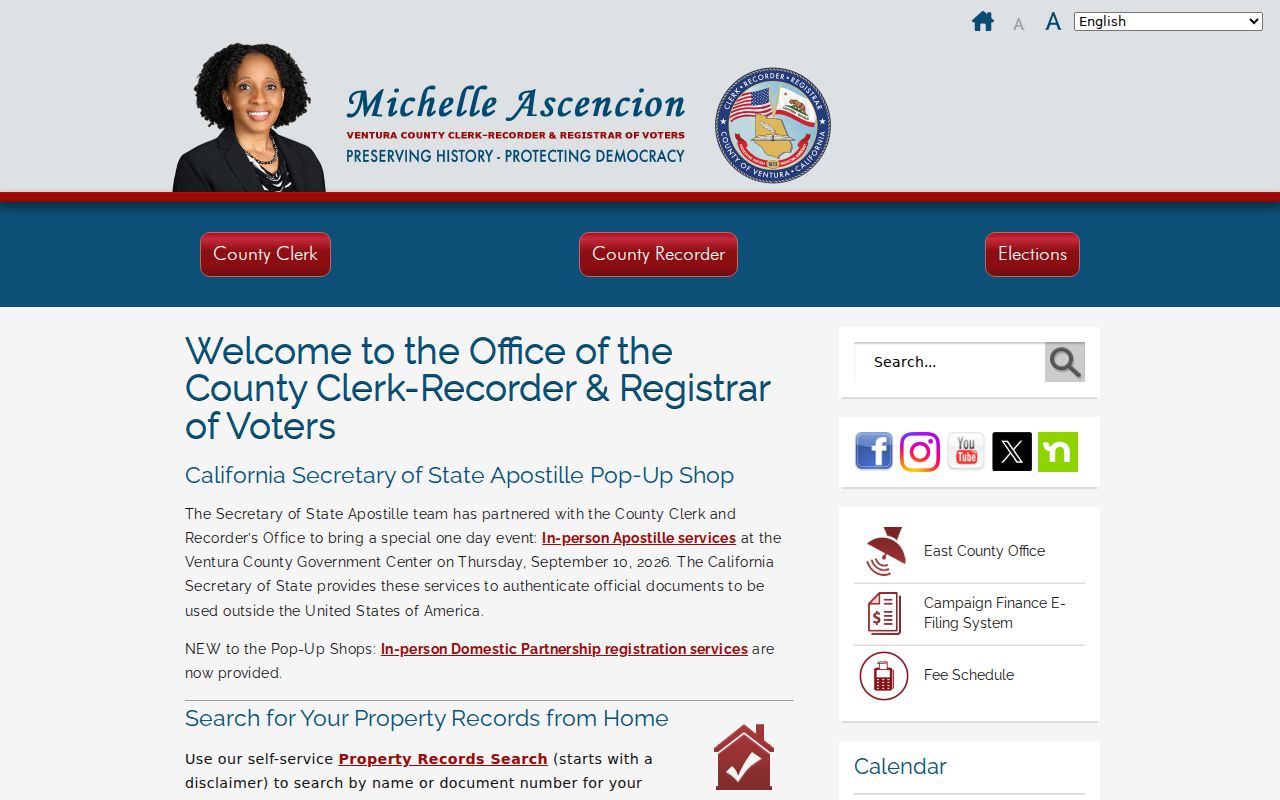
The office route connects the online index with counter service, record books, microfilm, and copy orders when a web result is not enough.
Ventura County Past Residents Begin With APN
An address is a useful start, not a stable key. Search the Assessor by street address or APN, then open the parcel in Ventura County’s County View GIS to confirm the shape, road, jurisdiction, and nearby lots. Record the situs, tract or lot reference, and any published legal description before reading names into the story.
- Grantor / grantee
- The grantor transfers or releases an interest. The grantee receives that interest in the recorded instrument.
- Chain of title
- The linked sequence of recorded transfers that connects one owner or interest holder to an earlier one.
- Legal description
- The tract, lot and block, parcel map, or metes-and-bounds wording that identifies land more reliably than an old street number.
- Situs
- The physical property location used for assessment. A mailing address is correspondence information and may point somewhere else.
Assessor data can show an assessee, APN, building facts, exemption indicator, and mailing address where public. Tax bills show account clues, not deed proof. A mailing address may be a post-office box, trust, agent, or different parcel, so it cannot stand in for occupancy.
Trace Ventura County Previous Residents by Deed
The deed chain follows recorded interests backward. Use the current assessee or owner display as a lead, then let the instrument image and legal description do the proof work. A name match without the parcel bridge can join two people who share a name.
- Capture the APN, situs, tract or lot, and legal description from the Assessor or County View.
- Search the Recorder index for the current acquisition, using the current owner as grantee and a sensible date range.
- Read the image or order a copy to confirm the grantor, vesting language, legal description, book/page, and document number.
- Search that grantor as an earlier grantee, matching the same land, spouse or trust, and cross-referenced instrument.
- Repeat until the online route ends, then move to the Recorder counter, deed books, or microfilm.
Older deeds may carry no street address, so match the legal description and book/page. The Self-Service index searches party name, document type, recording-date range, and document number. It is a catalog, not the deed; data can change without notice. Try spelling variations. The Recorder supplies certified copies.
Ventura County Previous Residents: Online vs History
Current online convenience does not equal historical depth. Ventura County reports real-property records beginning in 1873, but the exact Internet image cutoff is not stated on the public landing page. When an image or year is missing, ask the Recorder rather than treating the gap as a break in the ownership chain.
| Route | Best use | Important limit |
|---|---|---|
| Self-Service index | Names, roles, document types, dates, numbers, and book/page clues | An index is not the recorded instrument; images and coverage vary |
| Recorder counter, phone, and email | Staff direction, copy requests, and certification route | Appointments are expected; confirm the record and fee schedule |
| Deed books and microfilm | Earlier instruments and references beyond the web route | Match each item to the legal description and parcel history |
The Government Center Recorder is at 800 S. Victoria Avenue in Ventura. Counter hours are Monday through Friday, 8:00 a.m. to 4:45 p.m.; appointments are expected. Call 805-654-2263 or 805-654-3665, or email clerk.recorder@ventura.org. Copies and certifications follow the current fiscal-year schedule. A Thousand Oaks counter has rotating closures.
The Ventura Superior Court Records route shows the same pattern: older files may require counter, microfilm, mail, or off-site retrieval.
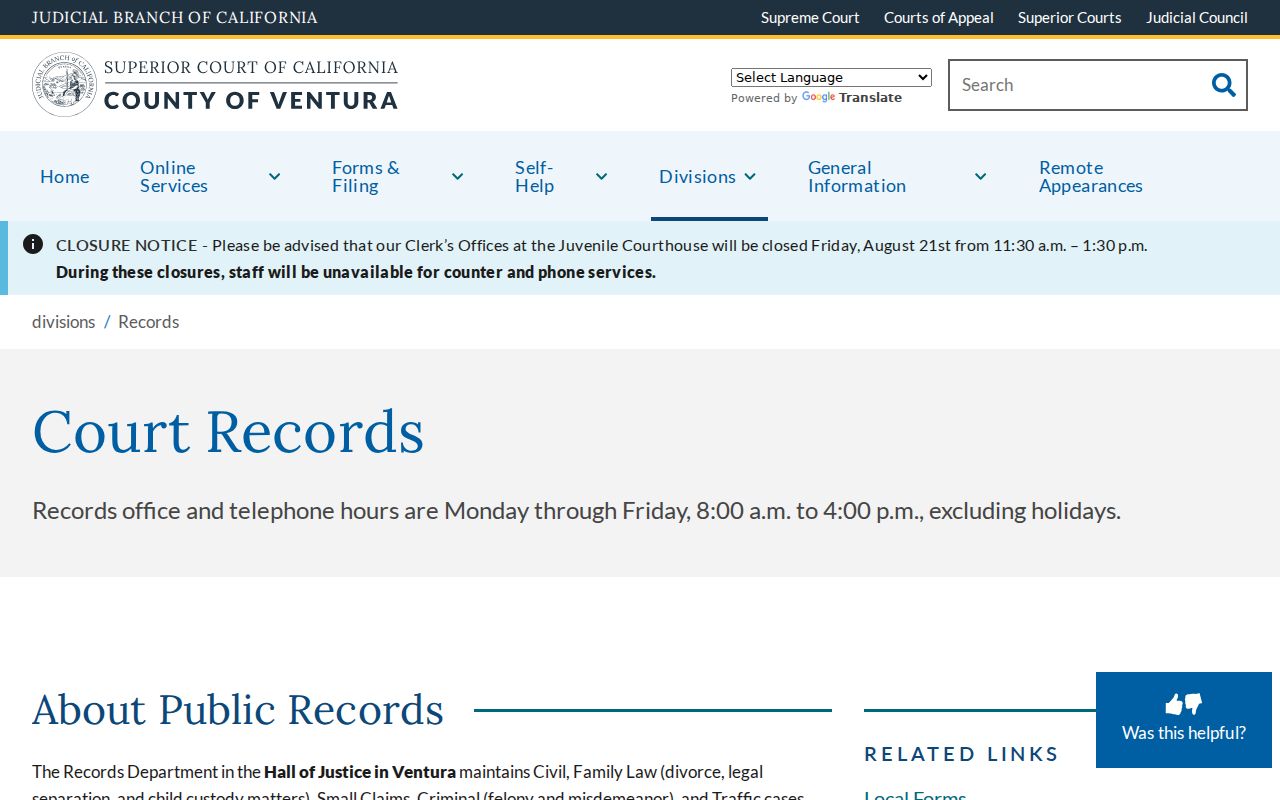
That access pattern is a useful reminder: an online hit can point to the right file, while staff-held material supplies the historical detail.
Before Ventura County Past Residents: 1873 Boundary
Ventura County was created from Santa Barbara County in 1872 and organized in 1873. Recorder and court series generally begin with the new county. For an earlier owner or occupant, cross into Santa Barbara County material, mission records, or Mexican land-grant documentation.
Address changes create a second local trap. The county’s Finding Hidden Gems guidance warns that “123 Main” may not mark the same place decades later. Compare directories on both sides of a renumbering with assessor maps, subdivision maps, Sanborn indexes, and city street records. The legal description is the stronger bridge.
Add Ventura County Previous Residents From Directories
Directories supply the occupant layer that deeds cannot. Ventura-area runs are scattered from 1908 through 1949, with cited editions from 1908, 1910, 1912, 1914, 1916, 1918, 1921, 1926, 1928, 1930, 1931, 1934, 1937, 1938, 1939-40, 1941-42, 1946, and 1948-49. NARA’s 1930-31 and 1934 holdings bundle Oxnard, Santa Paula, Fillmore, and Ojai, so a catalog title does not always show its full boundary.
Use the street or reverse section first for a house number and listed occupant. Then check the alphabetical entry for a spouse, widow notation, occupation, and residence or business address. Read each volume’s abbreviation key. Compare nearby editions to bracket arrival or departure, allowing for rural delivery, initials, name changes, and omissions.
The Ventura County city directory collections are held across the State Library catalog, local library shelves and microfilm, NARA, Ancestry Library Edition, FamilySearch, and museum or archive collections. Preserve the title page, publisher, included cities, year, call number, abbreviation key, and entry image. A directory is a dated snapshot, not a complete census.
Pair Ventura County Past Residents With Census
Federal census schedules are public through 1950 under the 72-year rule. Pair a directory year with the nearest 1910, 1920, 1930, 1940, or 1950 census rather than treating either source as complete. The directory may name several adults at an address; the census can add relation, age, birthplace, tenure, and the household’s enumeration district.
- Transcribe the street number, street variant, adult names, and city from the directory.
- Use NARA, FamilySearch, or Ancestry Library Edition to identify the likely enumeration district and census sheet.
- Compare surname, age, relation, birthplace, address clues, and tenure before treating two entries as the same household.
- Check the next directory and the deed chain for a move, sale, death, or name change that explains a mismatch.
Ventura County Library provides local-history catalog help, microfilm, in-library Ancestry access, Archives Unbound, and NewsBank. State Library and NARA finding aids identify collections without promising full scans. Cite the publication and census page separately.
Ventura County Past Residents, Permits, and Maps
Permits put physical change beside the people trail. Search the appropriate city building or planning system by address, APN, permit number, record type, and date range. Incorporated cities keep their own systems; Ventura County RMA handles unincorporated land. Permit files may identify an owner, applicant, contractor, work type, and date, but they do not establish a household roster.
Sanborn fire-insurance maps add a dated view of footprint, building use, construction materials, outbuildings, and address context. Sheets and years are city-specific, and the exact inventory must be checked in the Library of Congress, California State Library, or UCSB map catalogs. Compare a map with permits, assessor characteristics, directories, and photographs to explain when a structure changed.
Library of Congress Sanborn maps are a finding route, not a substitute for a recorded parcel description. Note: Sanborn dates can bracket structural change, but they do not identify every person who occupied the parcel.
Ventura County Previous Residents: Trail Endpoints
The county RMA Cultural Heritage Board’s Finding Hidden Gems house-history guide points to deeds, assessor and tax records, directories, newspapers, permits, maps, photographs, published histories, oral histories, and the Museum of Ventura County. That source list turns a bare ownership chain into a documented local story.
Newspapers and obituaries can explain a move, death, family tie, or business change. Cemetery registers offer another lead. For a deceased former owner, Superior Court probate records may connect a name to heirs, petitions, wills, and later conveyances when open. Ventura court inquiry separates Civil/Probate/Small Claims from other systems, and its web result is not the official record.
Records staff can search older unlimited-jurisdiction cases back to 1873 when the online route cannot. Hall of Justice records are at Room 218, 800 S. Victoria Avenue, Ventura; probate records are at Room 122, 4353 E. Vineyard Avenue, Oxnard. Inspection requires photo ID. Copy requests can be made in person, by email, or by mail using the court’s VN266 request form, with retrieval time and access limits varying by file.
Preserve the source title, date, page or instrument number, repository, and exact supported fact. A deed proves a recorded interest; a directory supports a listed address; a census supplies a household snapshot; an obituary reflects a published family account; probate links heirs only as far as the filed record does.
The Ventura County court records guidance explains the records route and its limits.
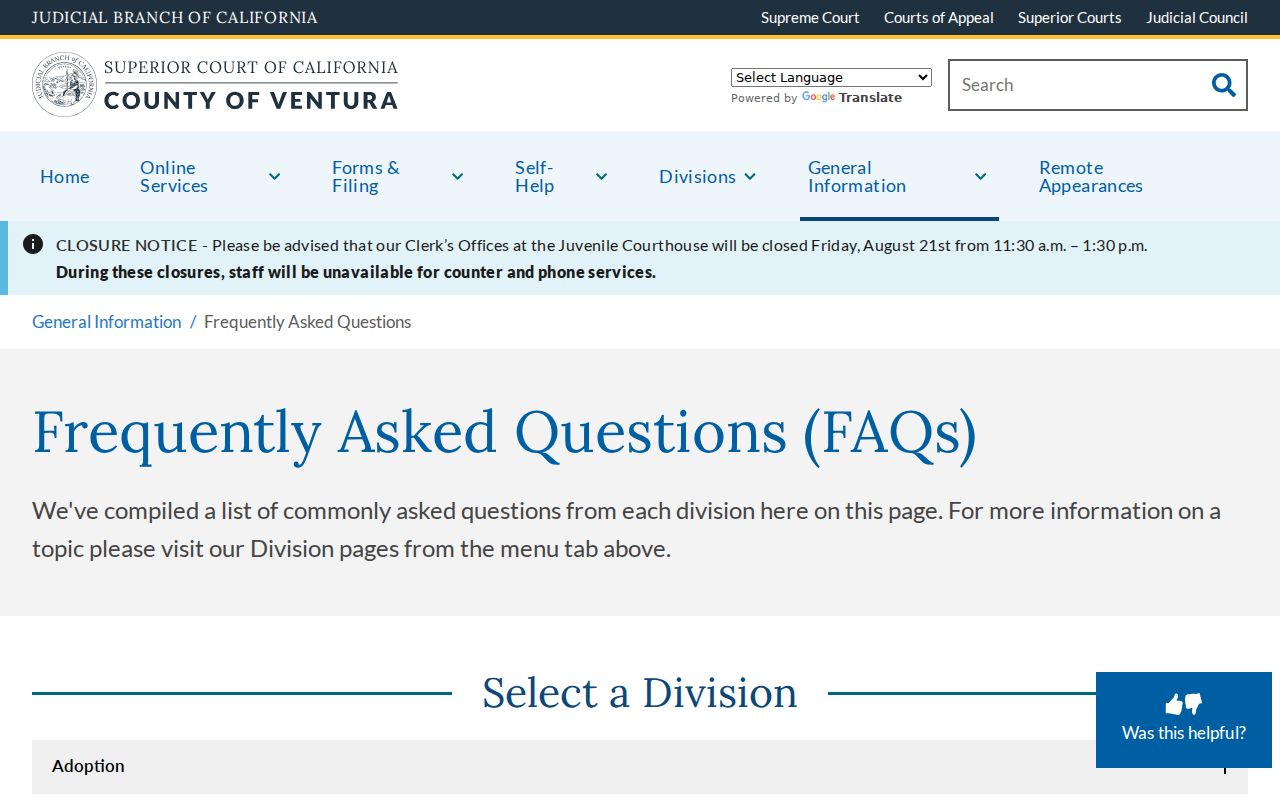
Use that official court guidance to decide whether a probate lead needs a web inquiry, counter visit, copy request, or archive follow-up.