
Ventura County City Directory Collections
Ventura County's historical directory shelf is scattered, not an annual run. Verified catalog evidence lists editions from 1908, 1910, 1912, 1914, 1916, 1918, 1921, 1926, 1928, 1930, 1931, 1934, 1937, 1938, 1939-40, 1941-42, 1946, and 1948-49. The table separates core volumes from bridge sources.
| Collection | Years/coverage | Where held | Access |
|---|---|---|---|
| Ventura-area printed runs | Scattered verified editions from 1908-1949, including the years listed above | California State Library catalog; local libraries; NARA; Ancestry Library Edition; FamilySearch catalog | Confirm each title, publisher, and format before using the shelf, microfilm, or a participating-library computer |
| NARA combined Ventura directory | 1930-31 and 1934; includes Oxnard, Santa Paula, Fillmore, and Ojai | National Archives finding aid and related census research channels | Use the finding aid to identify coverage; it is not necessarily a scanned-volume viewer |
| Telephone books | Coverage varies by city and year | California State Library telephone-book databases and local libraries | Useful as a subscriber bridge; check the catalog and local access rules |
| Newspapers and census | Local newspaper coverage varies; census pairing for 1910, 1920, 1930, 1940, and 1950 | Ventura County Library microfilm, NewsBank, Museum research library, NARA, FamilySearch, and Ancestry Library Edition | Use alongside a directory entry to test identity, household makeup, and timing |
A gap does not prove publication stopped or that a person left. A publisher may have skipped a year, a catalog may lack the copy, or one edition may cover several cities. The final printed year is not established. Verify each volume and preserve its title and publication pages with the citation.
Ventura County City Directories Begin in 1908
The earliest verified year for Ventura County's printed directories is 1908. Later editions appear in 1910, 1912, 1914, 1916, 1918, 1921, 1926, and 1928, followed by scattered 1930s and 1940s runs. These snapshots can bracket a household, shop, or address without implying that every intervening year exists.
Ventura County was organized in 1873 from Santa Barbara County. Earlier land, court, or church material may therefore sit under the older county name. Keep that jurisdiction beside the directory year when a surname reaches before the local series.
The verified sequence is a timeline, not proof of continuous publication. Publisher names and included cities can change, so the title and publication pages outrank a short catalog label.
- 1908: Earliest verified Ventura directory year.
- 1910-1928: Scattered editions include 1910, 1912, 1914, 1916, 1918, 1921, 1926, and 1928.
- 1930-31 and 1934: NARA's combined coverage includes Oxnard, Santa Paula, Fillmore, and Ojai.
- 1937-1942: Catalog evidence includes 1937, 1938, 1939-40, and 1941-42.
- 1946 and 1948-49: Later verified runs; later mid-century holdings and the final printed year need a volume-by-volume catalog check.
NARA's Ventura County City Directory Runs
The National Archives finding aid corrects a common catalog assumption. Its 1930-31 and 1934 Ventura-area coverage includes Oxnard, Santa Paula, Fillmore, and Ojai. A name absent from a city-only search may sit in a combined volume, so the city list matters as much as the cover.
Read the NARA description as a finding route, not a promise of a scan. Note the year, cities, and publisher, then compare the entry with the 1930 or 1940 census using age, relationship, birthplace, and owner/renter status. One line remains a clue, not proof.
The National Archives city-directory finding aid documents the combined coverage when a catalog title looks narrower than the listed places.
Keep the finding-aid description with the citation: a directory and a census answer different questions about one household.
Finding Ventura County Directories
Start with the Ventura County Library local-history route, which brings together catalog material, microfilm, in-library Ancestry Library Edition, Archives Unbound, and NewsBank. Search the city with “directories,” “telephone directories,” “history,” “newspapers,” “yearbooks,” and “obituaries.” A catalog hit does not reveal which branch owns a reel or whether it circulates.
The California State Library Ventura research guide points to city-directory and telephone-book databases. Search “Ventura” and each county city. For an online catalog sweep, save the title, publisher, included cities, year, call number, and format; the result may lead to a reference request, shelf visit, or participating-library computer.
For a library counter or museum/archive request, give the person or organization, city, date range, address, and record type. Ask about appointments, imaging, reproduction fees, and permission. The Museum Research Library holds manuscripts, photographs, maps, newspapers, ephemera, and family, business, and organization material. The California State Archives describes state and local series that may not be digitized.
The Museum of Ventura County Research Library adds maps, photographs, newspapers, and family files when a directory name needs context.
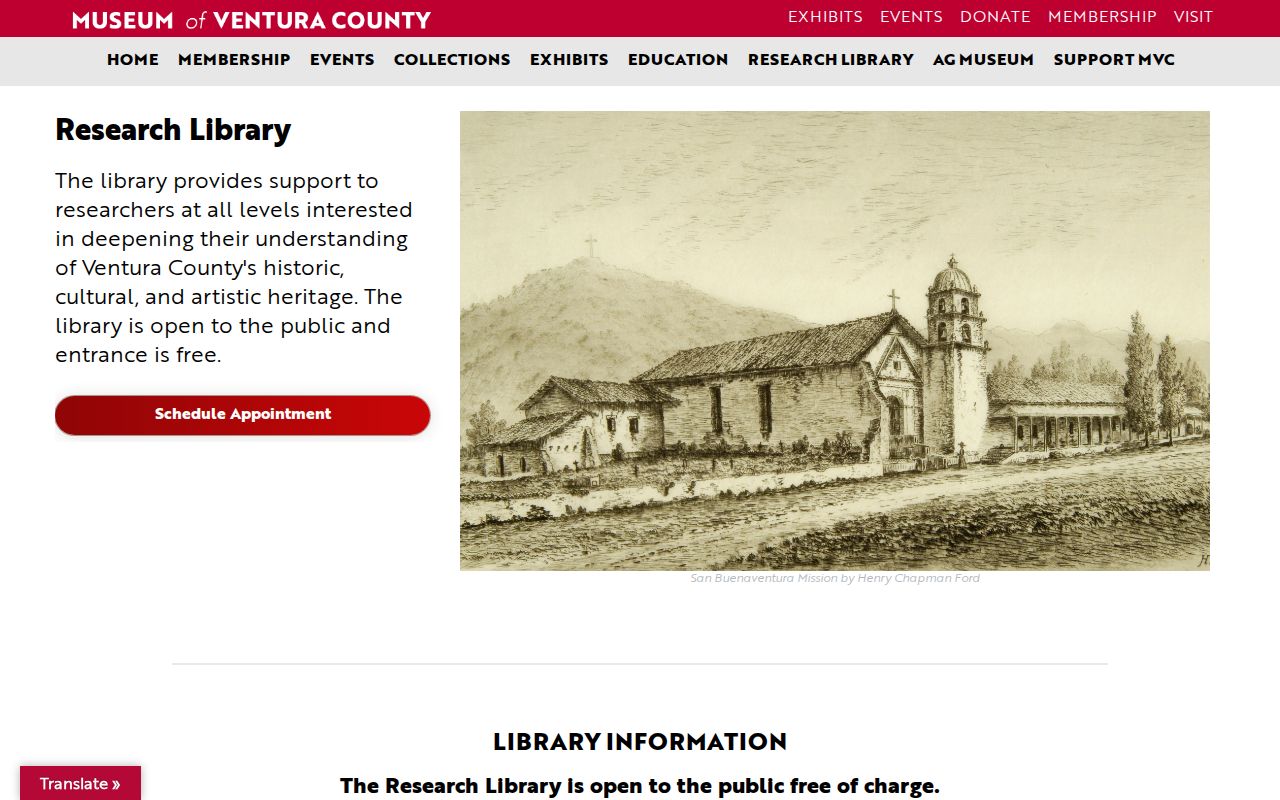
Follow repository appointment, reproduction, and permission rules.
The U.S. District Court for the Central District of California serves Ventura County, but its federal reference point is not a local directory catalog. Keep it distinct from NARA, library, museum, and State Archives holdings.
This keeps a federal records search from being mistaken for the historical city-directory shelf.
In the FamilySearch catalog, use United States, California, and Ventura, then inspect land, probate, court, vital, cemetery, directory, and naturalization groups. Camera or key icons can signal access limits. Ask a library counter which branch owns local microfilm and whether reels circulate.
Reading a Ventura County City Directory Entry
A Ventura-area entry may give surname, given name or initial, spouse in parentheses, widow mark, occupation or trade, and residence or business address. Alphabetical pages answer “who”; street pages answer “where.” Treat each mark as publisher shorthand, not a modern identity record.
| Surname and given name | Record the printed surname, given name, initials, and compound or alternate spelling. |
|---|---|
| Spouse in parentheses | A family clue, not proof of a separate spouse listing. |
| Widow mark | “Wid” states the edition's status; it does not give a death place or date. |
| Occupation or trade | A historical field that can separate same-name entries and point to corroborating sources. |
| Residence or business address | Read the number, street, and “r” or “b” notation in context. |
| Street section | Reverse pages place an address before its occupant or business. |
| Abbreviation key | Use that volume's key; “r,” “h,” “b,” and “wid” can vary by publisher. |
| Owner or renter caution | A tenure mark is not a deed. Confirm ownership separately. |
Photograph or transcribe the abbreviation page first. Older type can blur a letter, and a short form may mean residence, house, boards, or business in another volume. Preserve punctuation, initials, parentheses, and the full address.
- Criss-cross section
- The street-order or reverse section. Start with a known number or street, then read its occupant or business.
- Householder index
- An index organized around householders or groupings, useful when a street clue is stronger than a full surname search.
- Abbreviation key
- The publisher's explanation of short marks. Read it before interpreting “r,” “b,” “h,” or “wid.”
Criss-Cross Pages in Ventura County Directories
The criss-cross section reverses the alphabetical approach. Begin with a street and number, then compare its occupant or business with the name pages. It is useful for a house history, an inherited address, or a changed surname, and can test a number across editions.
Use it as a lead, not a complete roster. New construction, rural routes, unlisted households, and publisher choices leave gaps. Telephone books identify subscribers, not every adult; newspapers, maps, permits, photographs, and the county historic-property route can add context.
For present-day address work, the Ventura County street directory keeps modern questions separate from this shelf. Read criss-cross pages in the volume's year and city.
Bridging Missing Ventura County Directory Years
Bridge sources matter most in missing years. Pair a directory with the 1910, 1920, 1930, 1940, or 1950 census. Compare relationship, age, birthplace, and owner/renter status: the census anchors a household on a census date, while the volume adds spouse, trade, address, or a nearby snapshot.
Newspapers and telephone books can narrow the interval. Ventura County Library microfilm and NewsBank may surface notices, obituaries, advertisements, and addresses; the Museum can add older titles and ephemera. Telephone books identify subscribers. Preserve the date and source for any notice.
Sanborn maps bridge the built setting. Search the Library of Congress Sanborn map collection and compare city, sheet, street, footprint, and use with the address. Coverage varies, and a map explains a block without identifying every resident.
For a second identity check, use the Ventura County resident lookup as a separate modern-record workflow. Cite the historical entry, bridge source, and later corroboration separately.
The California State Archives collections route can add descriptive records, government series, maps, and local material not digitized. Name the city, date range, person or organization, address, and record type in a request.
Staff can distinguish a catalog description from an available image and explain access rules.
Using Ventura County City Directories
A strong tracing pass moves between name pages, street sections, and census years. Start with the surest fact: full name, address, spouse, or trade. Record edition and city. Separate same-name entries with address, household relationship, and age.
- Locate the entry. Search surname, given name, initials, compound surname, spouse, or trade.
- Check the street pages. Confirm number and street, noting nearby entries without assuming kinship.
- Compare editions. Mark each arrival, departure, move, or spelling change.
- Pair census years. Compare 1910, 1920, 1930, 1940, and 1950 household details with the directory.
- Explain a gap. Check newspapers, obituaries, probate, cemetery material, permits, and maps.
A missing person may reflect initials, remarriage, a rural route, another city, or omission. For Spanish and compound surnames, preserve paternal and maternal names, try de, del, or la, and compare accented and unaccented forms. The directory remains one dated clue.
Preserve the title page, publication page, city list, abbreviation key, page number, and transcription or image. Note whether the line came from the alphabetical, householder, or criss-cross section.
Address Shifts in Ventura County Directories
An address in one county directory may not match a later street string. Downtown blocks, ranches, oil fields, naval areas, citrus acreage, and postwar subdivisions shifted from rural routes or formal legal descriptions used in land records toward numbered streets. A household can stay connected while names, numbers, city limits, or postal labels change.
Test a suspected change with deeds, directories, newspapers, permits, maps, photographs, and published histories. Sanborn sheets help with a structure; tract maps and permits help with subdivisions. A deed or assessor record locates a parcel, but an owner name does not prove occupancy.
The comparison is simple: a dated directory entry describes a listed person at an address; land and map sources describe the parcel. A spouse, widow mark, or subscriber line does not prove more than its source states.